Complexity in corporations rarely appears as complexity all at once. At first, it is just conversations, nothing more. A call here, a call there. Maybe one more meeting. An escalation happening slightly earlier than expected. An increase in reporting cadence: more control – to not let things slip. Budget ownership, suddenly redefined, now a precautionary measure. Nothing dramatic has happened. And yet here they are: the symptoms of a system whose internal structures have outrun the mechanics to steer it.
The organizational reaction is regularly a mixture of local treatment and top-down planning. Local treatment is addressing the problem where it occurs: If the symptom wears the clothes of IT, IT is called. If lead times are rising, operations has to stand up to it. Top-down planning sets in when local treatment comes to nothing: Rigid coordination between divisions and management, special attention of management to details. Corporate entity autonomy is cut short in the process. If both approaches fail, increase the density of information flow to the managerial level.
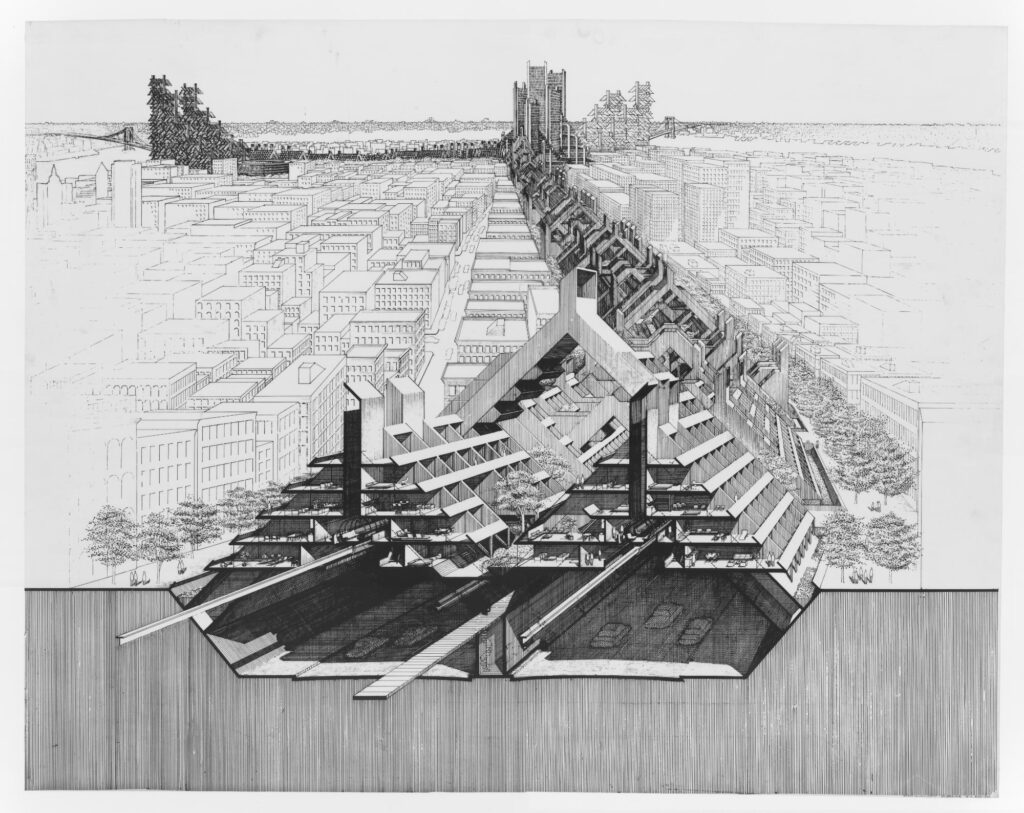
The stream of information gets pushed upward by design.
Dependencies, exceptions, explanations, local optimizations, all variations of narratives and initiatives are now converging directly at the managerial level as a giant hodgepodge of variables in the seven-digit domain. The managerial layer is then asked, or brings itself into a position, to absorb a seven-digit amount of elements with a two-digit number of people, who themselves can only handle a three-digit amount of meaningful distinctions before judgment completely collapses.1 But one cannot negotiate with complexity, so what happens?
The ceremonial answer is to create another governance layer and a plan.
The plan, including corporate objectives, is rarely consulted and lives out its life in a slide-deck on some server. The newly established governance layer intensifies the issue as it now has to manage exactly the same complexity as the managerial layer before it, plus one additional layer. Information stalemate follows and the first reflex is to fall back on legacy workarounds that were working earlier. Somewhat.
The alternative is a full stop.
This assertion obviously requires explanation. What is meant is to stop the reflex of increasing command-and-control: The issue cannot be localized, because it is a system of interacting problems. The complexity cannot be absorbed at management level because of combinatorial explosion. What, then, is the relevant frame of observation? It is not the unit, the department, or any single level of the organization. It is irreducible. The essential properties of any system are properties of the whole which none of its parts have.2 This changes the inquiry:
At first: Who owns the symptom?
Now: Why is the system doing what it does at an increasing rate, and what needs to change for it to reach a desired state? ■
References and Sources
- Ashby, W. Ross. An Introduction to Cybernetics. London: Chapman & Hall, 1956; Beer, Stafford. Brain of the Firm: The Managerial Cybernetics of Organization. 2nd ed. Chichester: John Wiley & Sons, 1981, 46–47. ⟵ Back to reference
- Ackoff, Russell L. “Systems Thinking.” Lecture, 43:09. Accessed July 7, 2026. https://youtu.be/9p6vrULecFI?si=R1xm96GUfEzvNqRR&t=2589. ⟵ Back to reference
- Seddon, John. Systems Thinking in the Public Sector: The Failure of the Reform Regime ... and a Manifesto for a Better Way. Axminster: Triarchy Press, 2008.