Glacial complexity in corporations rarely manifests itself bluntly. At first, it is just conversations, nothing more. A call here, a call there. Maybe one more meeting. An escalation happening slightly earlier than expected. An increase in reporting cadence: more control – to not let things slip. Budget ownership, suddenly redefined, now a precautionary measure. Nothing dramatic has happened. And yet here they are: the symptoms of a system whose internal structures have outrun the mechanics to steer it.
An ownership problem, appearing in production, gets involuntarily repurposed as misalignment. A system boundary got lost somewhere and reappears in IT as a technical issue. The tighter grip on budget control is a "transparency initiative". Lead times rise on the customer-facing side, even though KPIs are fine. Then the least-performing division gets singled out because it had the most visible surface area or the lowest tipping point threshold. Ît did not create the problem, it ran out of compensation earlier that the rest.
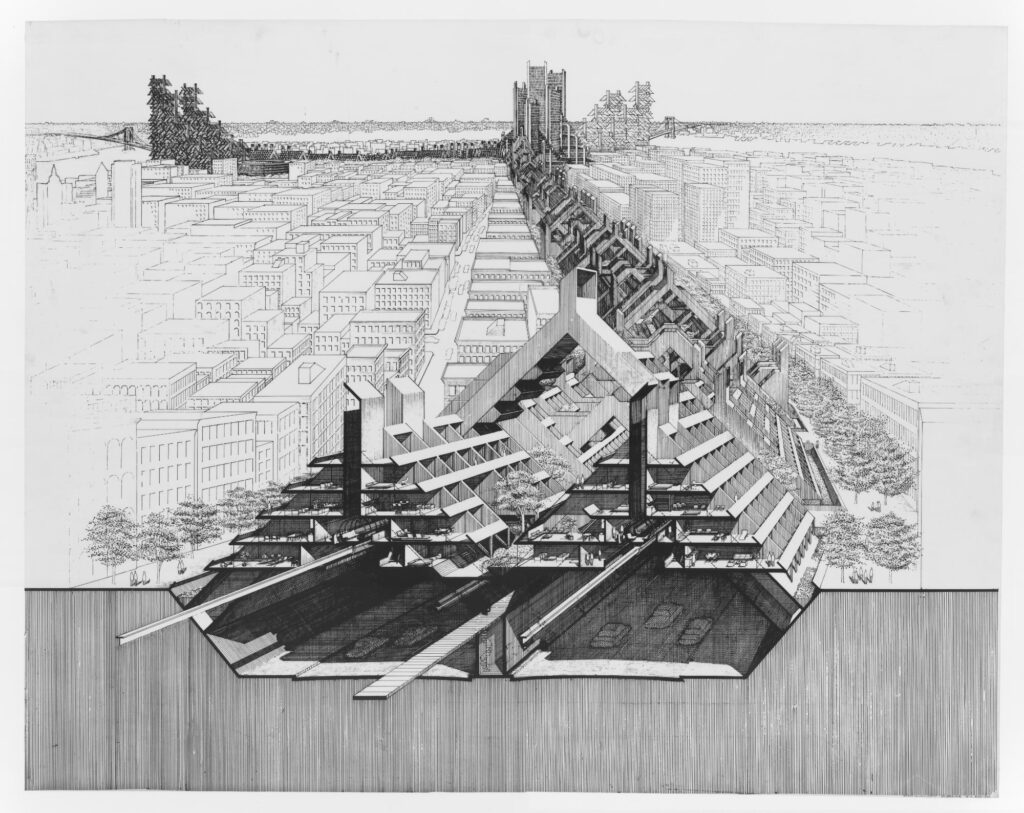
The organizational reflex is regularly a mixture of local treatment and top-down planning. The symptom is decomposed along divisional lines: If the symptom wears the clothes of IT, IT is called. If it wears the robes of operations, operations has to answer. If it reaches the customer-facing side, sales or service are asked to explain. If both approaches fail, increase the information density flow to the managerial level. Interestingly, each intervention may be functional within its own reference frame. The difficulty is that the fixed reference frame is reinforcing the problem. No part of a corporation can look at itself through the lens it uses and, at the same time, at the lens in use.
The local treatment fails; the stream of information gets pushed upward by design.
Dependencies, exceptions, explanations, local optimizations, defensive narratives and other initiatives are now converging directly at the managerial level as a giant hodgepodge of variables in the seven-digit domain. The managerial layer is then asked, or brings itself into a position, to absorb a seven-digit amount of elements with a two-digit number of people, who themselves can only handle a three-digit amount of meaningful distinctions before judgment completely collapses. But one cannot negotiate with complexity, so what happens?
The ceremonial answer is to create another governance layer and a plan.
The plan, including corporate objectives, is rarely consulted and lives out its life in a slide-deck on some server. Information stalemate follows and the first reflex is to fall back on legacy workarounds that were working earlier. Somewhat.
The alternative is a full stop.
This assertion obviously requires explanation. What is not meant is to stop work. What is meant is to stop the reflex of increasing command-and-control. Instead, consider observing the observers first. Possibly the mess is just mistaken for the place of its first appearance.
Which dependencies do exist? Which contradictions within the system are neutralized by people at regular intervals? Why is there no single correct view to frame the issues? Why do some problems behave like symptoms of other problems?
The purpose of this observation of the second order is not an academic one. Following directly from the origins of complexity management, it is the restoration of controllability. What has been observed is not an IT problem, a sales problem, or a governance problem. These are merely the local appearances of a problem taken apart at random; the reason why local treatment is regularly insufficient is that the system producing them remains in place. The behaviour of a system is never equal to the behaviour of its parts. It is the product of their interactions.
The usual inquiry: Who owns the symptom?
The second observer: Why is the system doing what it does at an increasing rate, and what needs to change for it to reach a desired state?